Watches and Wonders 2026 : the COSC reveals the inner workings of its certifications
Excellence put to the test of reality. Expertise is no longer explained. It is demonstrated.
22.04.2026
What does a watchmaking certification actually measure?
Is precision alone still enough to define excellence?
What factors influence the accurate running of a mechanical watch?
And how can the overall performance of that watch be expressed in tangible terms?
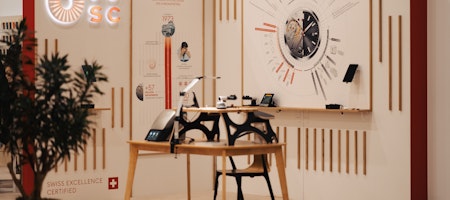
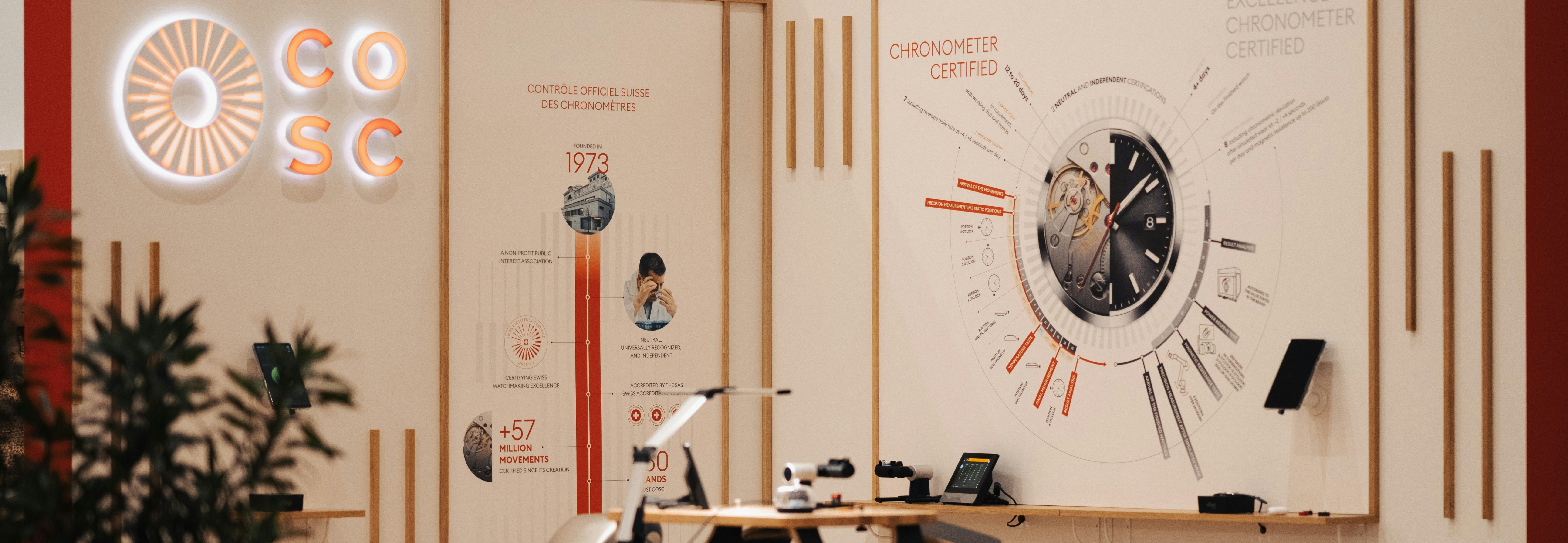
At Watches & Wonders 2026, at the heart of the LAB, the COSC answered these questions by offering visitors an immersive experience. Through a journey in six stages, the institution gave visitors the opportunity to see, understand and experience the founding criteria of Swiss watchmaking quality.
Precision put to the test of reality
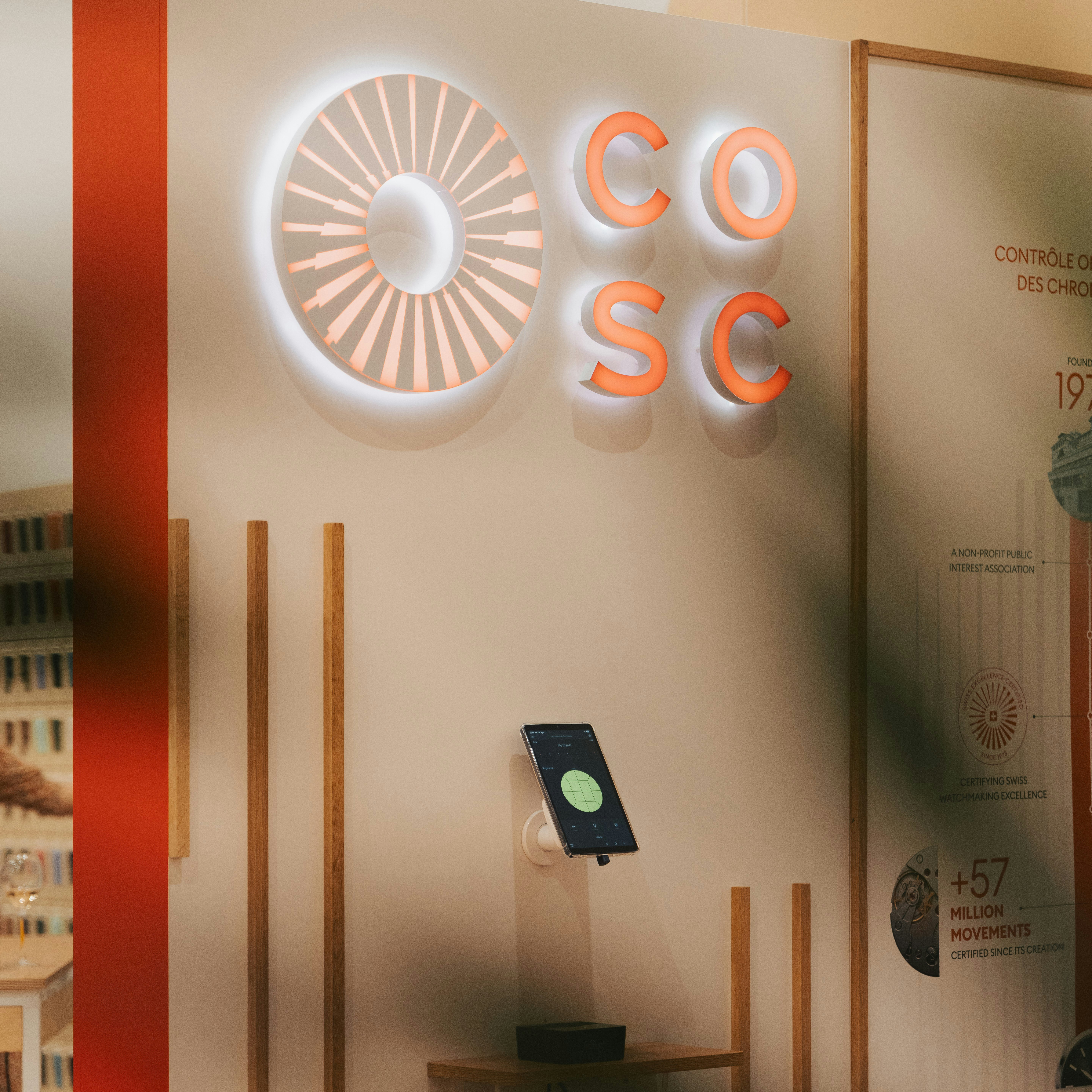
From the very first sequence, visitors become participants. Using a Teslascope Pulse electronic device, they can test their own watch, measure its instantaneous precision and detect any disturbances caused by magnetism. If necessary, the watch is demagnetised and immediately tested again. A concrete demonstration of the impact of magnetism on performance and how it can be measured, understood, and corrected in real time.
The authority of measurement
Visitors are then introduced to the foundations of the institution. Founded in 1973, the Contrôle Officiel Suisse des Chronomètres is a non-profit public interest organization, neutral and independent, responsible for testing and certifying Swiss Made watches.
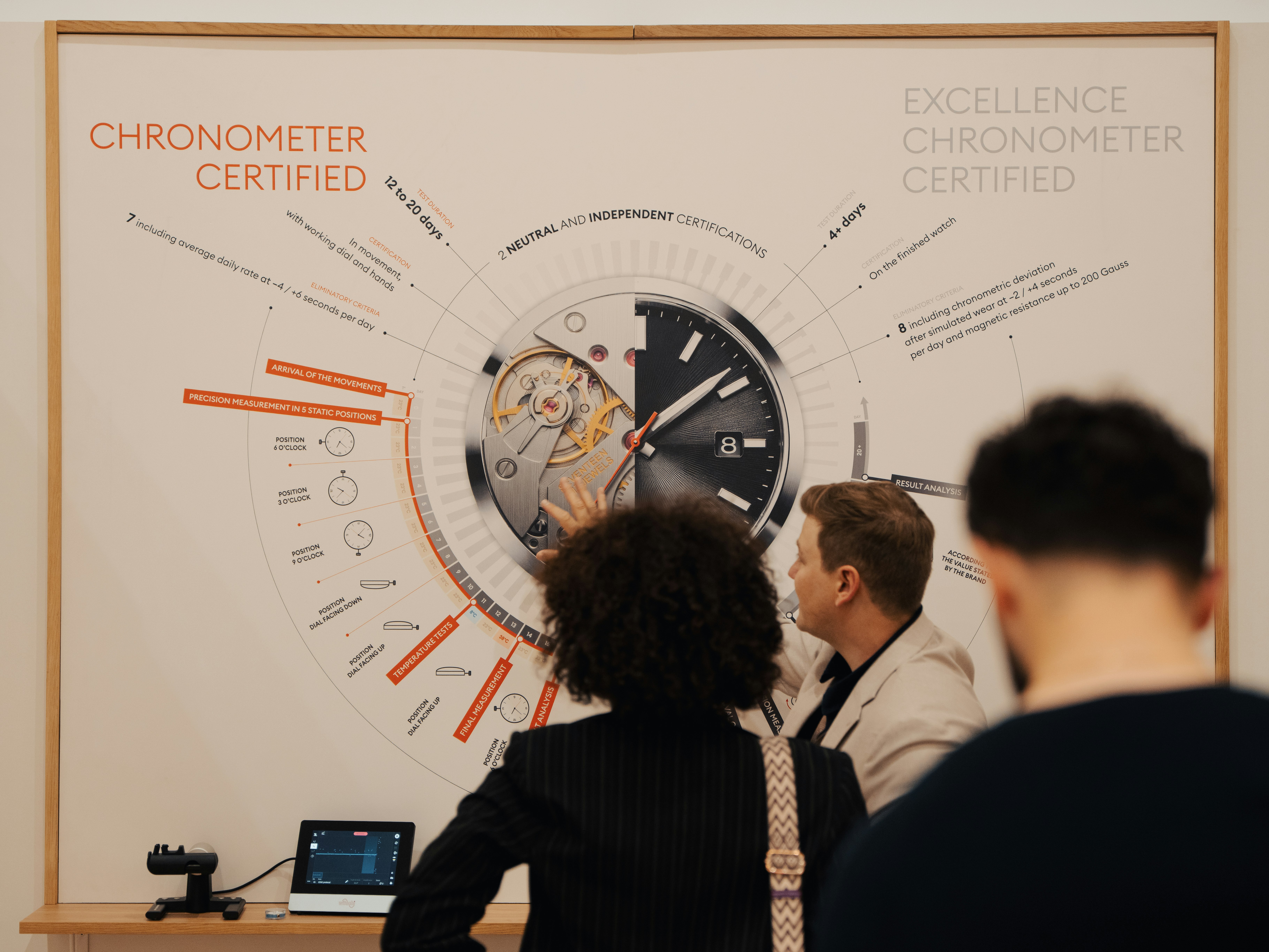
It awards the official “Chronometer Certified” label to movements that successfully meet a series of stringent precision tests. In 2026, the COSC takes a further step forward with the launch of a complementary standard, “Excellence Chronometer Certified,” designed to reflect a more comprehensive and demanding approach to performance.
Gravity at work
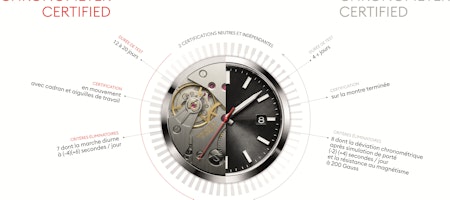
By handling a movement in different positions, participants directly observe the effect of gravity on its running using a Witschi device. Depending on orientation, the oscillator - the balance-spring assembly that regulates precision - never behaves in exactly the same way. This demonstration explains why a certified chronometer movement is tested for fifteen days, in multiple positions and at different temperatures. At the end of these trials, only movements meeting seven strict criteria, including a tolerance of −4/+6 seconds per day, are awarded the “Chronometer Certified” title.
The experience also highlights the difference between instantaneous acoustic measurement and long-duration measurement, carried out at the COSC using an optical camera, the only method capable of validating precision for the COSC certifications.
From precision to excellence
With the Excellence Chronometer, the COSC takes a decisive step: it is no longer just the movement that is tested, but the fully cased watch. Beyond precision - now tightened to −2/+4 seconds per day - this certification incorporates new essential parameters: simulated wear, magnetic resistance up to 200 gauss, and verification of the power reserve.
Once the movement has been certified as a chronometer, the cased watch is subjected to five additional days of testing to ensure consistent performance under conditions close to real-life use.

At the workbench
Visitors then take action. Stepping into the watchmaker’s role, they discover the art of regulation: a delicate balance in which every adjustment influences the movement’s rate. Whether flat, vertical, or simulating real wear, the watch never behaves in exactly the same way. The goal is not to achieve absolute perfection in a single position, but to find the best overall compromise. Guided by the COSC experts, participants experience the key stages of regulation: balancing the beat, adjusting the rate, and refining precision through fine corrections. Every gesture, however small, reveals the sensitivity of the movement.
A direct immersion into watchmaking expertise, where precision appears for what it truly is: the result of meticulous, demanding, hands-on adjustment.
The final diagnosis
The journey concludes with a comprehensive analysis of a cased watch using the Waio, an instrument designed to quickly and automatically assess the overall performance of a watch, even outside a traditional workshop. In just a few minutes, the watch is tested in multiple positions, its instantaneous rate measured, its amplitude analyzed, and its exposure to magnetism evaluated and, if necessary, corrected.
Designed as a holistic diagnostic tool, Waio provides a clear and objective overview of the watch’s behavior. At the end of the test, all data is accessible via a QR code, allowing each participant to leave with a tangible record of the experience.

Feedback gathered from participants confirms the value of a more accessible and comprehensive approach to watchmaking certification. Before their visit, only 38% said they had a clear understanding of COSC’s role. After completing the journey, 89% reported a better understanding of the criteria that define a watch’s performance. While precision remains central, 76% of participants now associate excellence with a broader set of parameters: magnetic resistance, long-term reliability and compliance with the stated power reserve. Finally, 92% consider independent certification to be an essential reference point when choosing a watch.